

Taylor Tookes Talks Inclusion, Pride, and Breaking Barriers in High Fashion

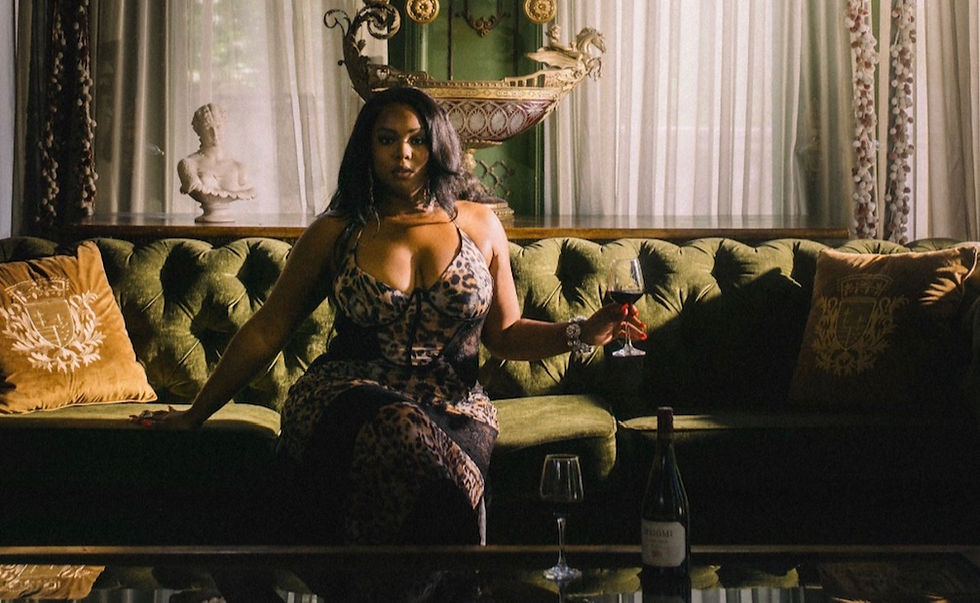
In the words of Tyra Banks, “Short is fierce too,” and few people embody that sentiment more boldly than Taylor Tookes.
Standing at just 5-foot-1, Taylor is challenging one of fashion's most deeply rooted standards and proving that presence, talent, and determination can be just as powerful as height. In an industry that has long defined who belongs on the runway through rigid measurements and expectations, she has refused to let anyone else determine what is possible for her career.
From becoming one of the first Black petite models to break into major fashion spaces to walking both New York Fashion Week and London Fashion Week, Taylor continues to push conversations around representation, inclusion, and visibility forward. Her journey has not been without resistance. Like many trailblazers, she has faced skepticism, rejection, and industry gatekeeping. Yet rather than allowing those experiences to discourage her, she has used them as fuel to continue creating opportunities not only for herself, but for future generations of aspiring models who have been told they do not fit the mold.
As the fashion industry continues to celebrate diversity and inclusion, Taylor remains candid about where progress has been made and where meaningful change is still needed. Whether discussing height representation, body diversity, or the experiences of LGBTQ+ creatives within fashion, she is committed to speaking openly about the realities behind the headlines.
In recognition of Pride Month, Women for the Culture sat down with Taylor to discuss breaking barriers, challenging industry norms, embracing authenticity, and why confidence begins with refusing to let someone else's limitations become your own.

Q&A
W4TC: You’ve broken barriers as one of the first Black models standing at 5’1 to walk in major fashion spaces. Did you always believe there was room for you in high fashion, or did the industry make you fight for that confidence?
TT: Yes, I’ve always believed there was room for me in high fashion because I was always taught there’s a first time for everything. When it comes to career, I’ve stuck to the solid decision of honoring myself by never letting anyone’s rejection or opinions define my confidence. I simply didn't care and didn’t ask.
Rejection was one thing that boosted my confidence because I don’t take no for an answer when it comes to my goals. I’ve also always been incredibly inspired by plus sized models. Seeing them on the runway and in major campaigns has always been an extra boost of confidence.
I remember there was a time when the fashion world would heavily ignore them, berate them and outcast them. Now, even though we aren’t where we need to be with their inclusion either, we have for sure come a long way because there are some plus size models who have indeed made a name for themselves and still walk several shows a season. Watching that progress has reinforced my belief that fashion can evolve. It gives me more confidence and hope that petites will be more recognized and accepted as well.
W4TC: Walking in London Fashion Week is a huge accomplishment. What was going through your mind the moment you stepped onto that runway?
TT: I was really excited! It was definitely a welcoming vibe The designers, MyL Berlin made sure to showcase models of all sizes and other than that, I think this was the first runway show where I actually felt that everyone was genuinely excited about inclusion not just for a performance, but for real. When I stepped onto the runway, I just wanted to kill it and represent short women.
W4TC: As someone who doesn’t fit the traditional runway height standard, what message do you think your success sends to other aspiring models?
TT: I think it shows them that they can do it too and if you ignore people’s unsolicited
opinions and limitations, have tunnel vision toward your goals, you can absolutely achieve it. If other aspiring models take anything from my success, I hope it’s the courage to ignore people who disguise discouragement as concern and show up anyway. What makes you different can become your greatest strength and I want aspiring models to know that there's space for them in this industry too.
W4TC: Have you ever had someone in the industry try to limit you because of your height or image? How did you push through that?
TT: Oh, of course! So many people have tried - from agencies to a London Fashion Week casting director (how funny and ironic is that). I’ve been blocked by agencies for calling out their height requirement, which then led other people to do the same and face the same treatment before the agencies eventually removed the requirements. These people are insanely performative!
I’ve also had people ask me why I don’t just shift to influencing or acting full time and it genuinely takes a lot in me to hold back. Because obviously, if I wanted to do that, then I would. Hello? In all honesty, it’s not something I have to push through.
I just ignore it and continue as I am because I genuinely don’t care about anyone’s opinion that I didn’t ask for. I know what I want, I know what I’m here to accomplish and that’s what I’m going to get and do.

W4TC: The fashion industry talks a lot about inclusivity now, but from your perspective, do
you think real change is actually happening?
TT: No, not really because where are the short girls and why is the number of plus size girls dwindling on the runway..? I think they’re in a mindset of performative inclusion. So, one set of non-traditional models will have their season for a short period of time, but only one or two of those models will continue to book - kinda like tokenism. When genuine, you’d consistently see change - not just for a season, but regularly. They clearly aren’t there with that comprehension right now.
W4TC: What has been your most emotional or rewarding modeling moment so far?
TT: I think becoming the first 5’1 model to walk NYFW and London Fashion week is rewarding enough. For years, fashion has been gatekept for people like me (of my height) and even when short girls were given a chance in the past, they were all white. Obviously, there’s a bit of bias there (as it always has been in the fashion industry). To breakthrough in two different major fashion spaces will always be an emotional moment or me. Milan and Paris are next - just watch.
W4TC: What’s one misconception people have about modeling that you wish would
disappear?
TT: The misconception that there’s only one type of model who can succeed. I think the industry is much bigger than the boxes people try to put us in. Talent, presence, professionalism and determination matter just as much as fitting a traditional mold.. If people in power put their money where their mouth is, speak up and showcase that more, then non-traditional models wouldn’t have to justify their reasoning of belonging.
W4TC: Do you feel pressure to constantly maintain a certain image online as both a model and influencer?
TT: No, not really because I’m not an influencer. As for modeling, not at all - I’m just myself.
W4TC: If you could headline any fashion campaign or walk for any designer in the world, who would it be and why?
TT: Christian Siriano and Veejay Floresca because I feel like they’re two of the only designers that actually understand what inclusivity is.. It seems as if they’re the only ones who are actually consistent and not performative, not just with showcasing, but also with advocating.
W4TC: What advice would you give to shorter girls who were told modeling wasn’t realistic for them?
TT: My advice would be simple: don't let someone else's limitations become your own.
People will often tell you what is or isn't possible based on what they've seen before, but every breakthrough happens because someone was willing to do what hadn't been done yet.
Focus on becoming the strongest version of yourself, developing your craft and showing up consistently. There will always be people who project onto you, but one person's opinion is not a prediction of your future.
If I had accepted every limitation people tried to place on me, I wouldn't be where I am today. Most importantly, don't spend your energy trying to fit into someone else's idea of what a model should be.
Lean into what makes you unique. The qualities that make you different are often the same qualities that make you memorable and this industry always remembers people who bring something new.

W4TC: It's Pride Month. What does being visible and authentic mean to you personally?
TT: To me, being visible and authentic means showing up as yourself without shrinking to make other people comfortable. The more honest I am about who I am, the more freedom and confidence I have in both my personal life and my career.
Visibility matters because you never know who might see themselves in your story.
At the same time, authenticity is important because representation means the most when people feel empowered to be themselves rather than fit into someone else's expectations.
For me, it's about embracing who I am unapologetically and encouraging others to do the same.
W4TC: How important is representation within both the fashion industry and LGBTQ+
community?
TT: Representation is incredibly important because it expands people's understanding of who belongs in a space. When people see other people from different backgrounds, identities, height, body types and experiences succeeding, it challenges outdated ideas about who gets to be seen, celebrated, and included.
In fashion especially, representation matters because the industry influences culture and how people see themselves. Seeing a wider range of people reflected in campaigns, editorials and on runways can help others feel recognized and inspire them to pursue opportunities they may have thought weren't available to them.
As for the LGBTQ+ community, representation is equally important because visibility creates connection, understanding and a sense of belonging. It reminds people that they are not alone and that there is space for them to exist authentically. The more diverse and genuine that representation is, the more powerful its impact can be!
W4TC: Do you think brands genuinely support LGBTQ+ creatives year-round, or only during
Pride Month?
TT: I think we’re getting better with it, but I’ve noticed in the fashion industry, it’s easier for queer non-traditional models to book during pride month and rarely outside of pride month. It’s giving performative and that doesn’t look like genuine support. Of course, there are brands who genuinely support those creatives year round and I think those are the brands people should be prioritizing.
W4TC: What advice would you give to young people who are still learning how to confidently embrace who they are?
TT: My advice would be to spend less time worrying about who other people think you
should be and more time getting to know yourself. Who cares what people have to say!! They aren’t YOU and YOUR opinion of yourself is the only one that matters. Confidence doesn't come from being accepted by everyone - it comes from trusting yourself and being comfortable with who you are. Stop apologizing for who you are and embrace it!!!
The truth is that no matter what you do, there will always be people with opinions, but you don't have to carry those opinions with you. The more you focus on your own goals, values and happiness, the easier it becomes to embrace yourself without seeking constant validation from others.

Rapid Fire with Taylor Tookes
W4TC: What’s one thing about Taylor Tookes that fans would be shocked to learn?
TT: Probably the fact that I’m learning 4 languages at once.
W4TC: What’s your dream runway or “I made it” moment that you still want to accomplish?
TT: Christian Siriano, Versace, Miu Miu.
W4TC: Who are your top three fashion icons?
TT: Aariana Rose Philip, Iman and Beverly Johnson.
W4TC: What’s your go-to confidence boost before a shoot or runway walk?
TT: Honestly, just showing up is enough.
W4TC: What’s next for you that people should be excited about?
TT: I can’t really say, but it’s a dream come true!
Taylor Tookes represents more than a modeling success story. She represents the power of refusing to accept limitations that were never yours to carry in the first place.
In an industry that still has work to do when it comes to authentic inclusion, her willingness to challenge outdated standards continues to create space for others who have historically been overlooked. Through her advocacy, visibility, and determination, she is helping to reshape conversations about who belongs in fashion and what representation truly looks like.
Perhaps most importantly, Taylor's journey serves as a reminder that confidence is not built through validation from others. It is built through trusting yourself, showing up consistently, and remaining committed to your goals regardless of who doubts them.
With her sights set on Milan and Paris Fashion Week, Taylor is far from finished breaking barriers. If her story is any indication, the fashion world has only seen the beginning of what she is capable of accomplishing.
And for every young person watching from the sidelines, wondering whether there is room for them too, Taylor's answer is clear: create your own lane and walk it unapologetically.
Connect With Taylor Tookes
Follow Taylor's journey as she continues breaking barriers in fashion and advocating for greater representation across the industry.
Instagram and TikTok: @taylortookes


Comments